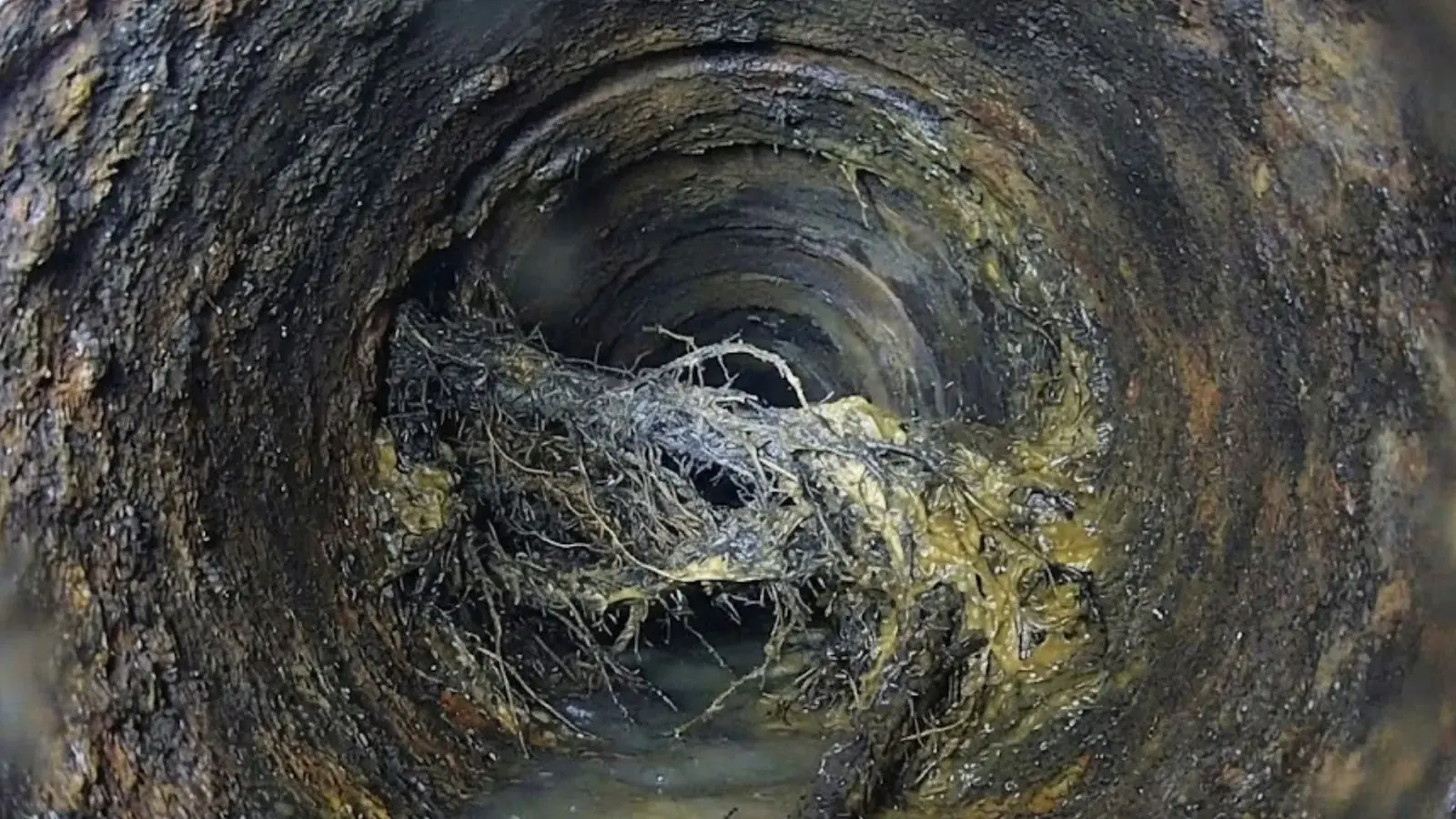
A clogged drain is rarely a mystery. Each room has its own typical culprit, and the pattern of how the drain fails often tells you the cause.
A kitchen sink that slows over weeks points to grease. A bathroom sink that gurgles points to hair and soap. A basement floor drain that backs up when the washer runs points to the main line.
This guide goes room by room, and then looks at the causes that are not about habits, like roots, scale and sagging pipe. It ends with a list of simple changes that stop most clogs before they start.
Causes by room
| Room | Typical cause | What helps |
|---|---|---|
| Kitchen | Grease, food scraps, coffee grounds, starchy foods | Strainer, wipe pans, no grease down the drain. |
| Bathroom sink | Hair, soap scum, toothpaste, toothpicks | Clean the stopper, clean the trap. |
| Tub and shower | Hair and soap | Hair catcher, weekly cleaning. |
| Toilet | Too much paper, wipes, feminine products, toys | Flush only toilet paper and waste. |
| Laundry | Lint, detergent residue | Lint trap on the washer hose, use the right detergent amount. |
| Main line | Roots, wipes, grease, scale, a sag | Camera and cleaning. |
Kitchen clogs: the grease problem
Cooking fat is liquid when it is hot and solid when it is cool. It coats the pipe wall and catches whatever passes by. Over months, the passage narrows until a small piece of food stops it. The answer is to keep fat out of the sink, not to dissolve it after it is in the pipe.
Coffee grounds sink and pack. Starchy foods like rice and pasta swell. Eggshells and fibrous scraps can bind with grease. If a disposal is present, it breaks scraps into smaller pieces but does not make them dissolve.
Bathroom and laundry clogs
Hair is the main cause of tub and shower clogs. It wraps around the drain strainer and catches soap, and the mix forms a mat. A hair catcher is the simplest prevention. Pull it out and clean it each week, and the drain stays open.
Laundry drains handle lint, soap and fabric softener residue. A lint screen on the washer hose catches fibers before they enter the standpipe. If the washer drains slowly, check the standpipe and the trap before calling.
Clogs that are not about habits
Some clogs come from the pipe. Tree roots enter at joints and grow into a mat that catches debris. Cast iron scale builds up and narrows the pipe.
A sagging section, called a belly, holds water and debris. A broken pipe lets soil in. These causes will return no matter how careful you are.
If the same drain clogs again and again, a camera shows whether the cause is in the pipe. See sewer inspection and sewer line repair for what happens next, and hydro jetting if buildup is the cause.
Habits that prevent most clogs
- Keep grease, oil and fat out of the sink. Collect it in a can and throw it away.
- Use strainers in kitchen sinks and hair catchers in tubs and showers.
- Flush only toilet paper and human waste. Throw wipes, even those labeled flushable, in the trash, since industry flushability guidelines from INDA and EDANA do not stop many wastewater agencies from asking residents to keep all wipes out of toilets.
- Run hot tap water for a minute after washing dishes and cold water with a disposal.
- Do not pour paint, concrete, coffee grounds or food scraps down a drain.
- Have a camera look at the line if it clogs more than once a year.
How to read the pattern of a clog
The way a drain fails tells you where the clog sits. One fixture that is slow points to its own trap or branch. Two fixtures on the same wall that are slow point to a shared branch line. Every fixture in the house slowing down, or a toilet that gurgles when the washer drains, points to the main.
Timing matters too. A clog that appears all at once is usually a single object or a wad of material. A drain that slows week after week is usually buildup, and it will keep slowing until the line is cleaned. Tell the plumber which one you have, because it changes the tool we bring.
If you have cleared a drain yourself and it came back within days, say so on the phone. That detail is often the difference between a quick cable visit and a recommendation for jetting or a camera look.
Older Frankfort homes and their drains
Frankfort was founded in 1786, and the city has been Kentucky's capital since statehood in 1792. Neighborhoods near the Capitol and in South Frankfort contain houses that predate modern plastic pipe. Their drains may be clay or cast iron, and those materials are prone to roots and scale. In towns around Frankfort, such as Lawrenceburg and Midway, similar older housing stock exists near the downtown cores.
Ask your sewer provider where its responsibility ends and yours begins before arranging a repair. Our pages for Lawrenceburg and Midway explain how we serve towns beyond Frankfort, and our drain cleaning page covers the service itself.
Source type: public historical records and local sewer provider guidance
Questions we hear about common causes of clogged drains
Grease combined with food solids. It builds slowly on the pipe wall.
They do not break up like toilet paper. Throw them in the trash.
Hair and soap may be lower in the trap or the branch. A cable reaches it.
Roots grow slowly in cold weather, but a mat already in the pipe will still catch debris.
Older pipe materials are more prone to roots and scale, so repeat clogs are more common there. A camera shows the cause.