Emergency leak detection in Frankfort, KY starts when water shows up where it should not, or when the meter keeps moving after every tap is closed. If water is actively spraying, shut the main valve and call our 24/7 line. If the signs are quieter, such as a stain, a warm patch on the floor or a bill that jumped, call anyway. A small leak found early costs far less than a large one found late.
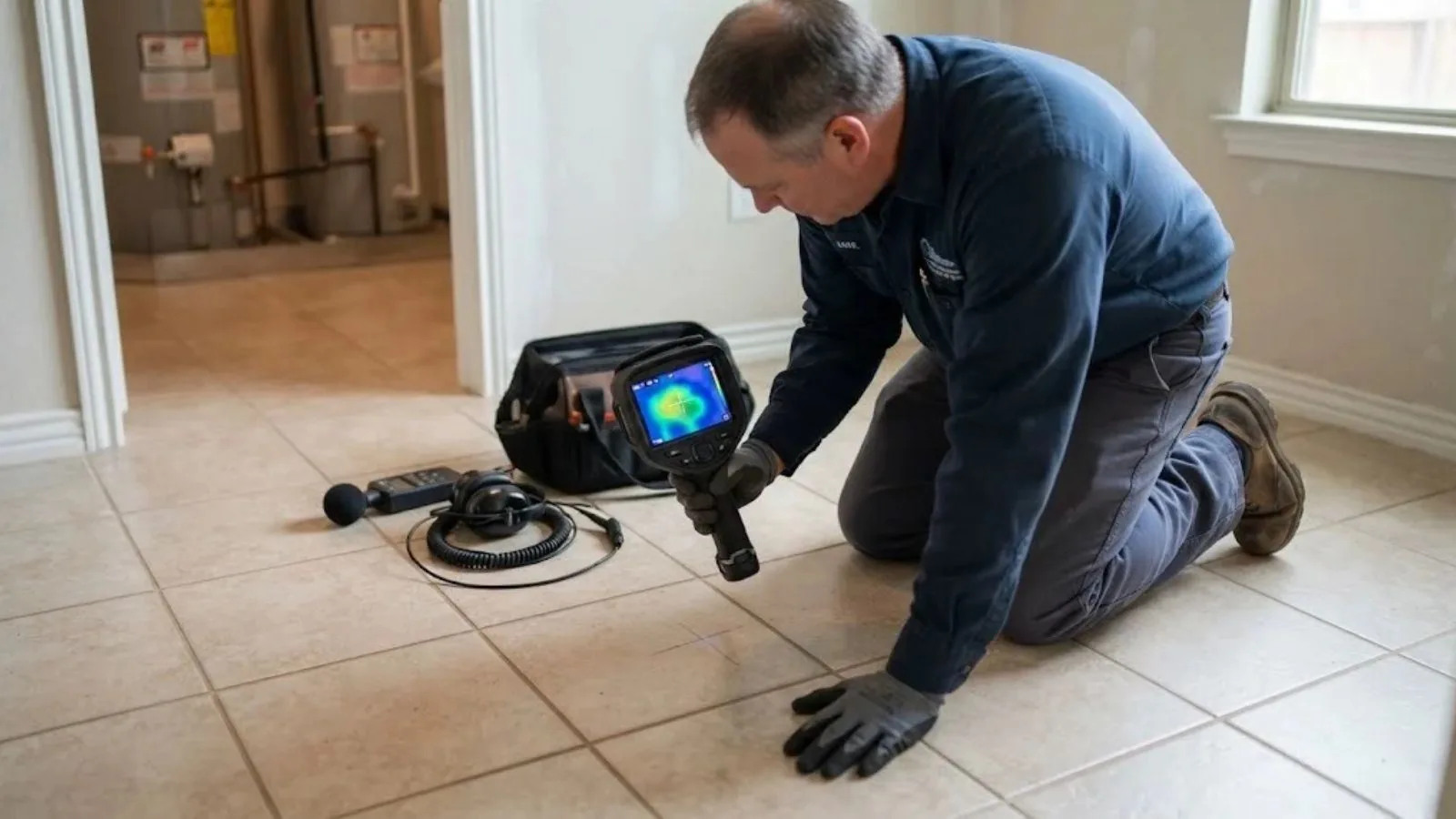
Leak detection means finding the exact location of a leak without tearing open more than necessary. We use meter tests, pressure tests, acoustic listening equipment and thermal imaging, then open the smallest access the repair needs. The same crews handle the repair, so you do not coordinate two companies.
Water showing up or the meter running: what to do first
- Close every tap and appliance, then check whether the meter dial or leak indicator still moves. Movement with everything off means a leak somewhere between the meter and the fixtures.
- Turn off the main valve inside the house. If the meter stops moving, the leak is inside the house. If it keeps moving, the leak is on the line between the meter and the house.
- If water is actively flowing, leave the main off and move valuables up. Switch off power in a wet area only if you can reach the panel safely.
- Photograph stains, bubbling paint, warped flooring or wet baseboards. Date the photos for insurance.
- Write down the water bill history for the last several months. A steady rise points to a slow leak.
Meter still running or bill jumped: the high-bill leak test
A jump in the water bill with no change in habits is one of the most common reasons people call. The test is simple. With every fixture off, watch the meter or its leak indicator for several minutes. If it moves, water is going somewhere.
A running toilet is the most frequent culprit and easy to check with a few drops of food coloring in the tank. If the bowl shows color without flushing, the flapper is leaking, and our toilet repair team can fix it. If the toilet is dry, the leak is in a pipe, a water heater connection, an irrigation line or the service line.
Frankfort Plant Board divides the service line into a utility side and a customer side. The customer side runs from the meter to your house, and leaks there are the homeowner's to fix. The utility's own customer service line is listed on its website. Read your bill and call the Plant Board if you want a meter check.
Where leaks hide and how we find them
| Where it is | What you notice | How we locate it |
|---|---|---|
| Inside a wall or ceiling | Stain, bubbled paint, musty smell | Moisture meter, thermal camera, acoustic listening. |
| Under a slab | Warm floor spot, steady meter movement | Pressure test, tracer listening. |
| Crawl space or under the house | Damp insulation, sagging floor | Visual check, moisture reading, pressure test. |
| Water service line | Meter runs, wet yard or low pressure | Isolation test, listening along the line. |
| Fixture or appliance connection | Drip, rust, dampness at base | Visual check and a dry-paper test. |
| Irrigation line | Soggy lawn spot, high bill in season | Zone-by-zone pressure test. |
Ceiling, wall and attic leaks
A brown ring on a ceiling does not always mean a supply line is leaking above it. It can be a drain, a vent boot, an appliance or a roof leak. We check each possibility in order, starting with the plumbing, so you know whether a plumber or a roofer is the right call.
If a ceiling is sagging, stay out of the room and keep people away. Water pooling in drywall can bring the whole panel down without warning. Poking a small hole to let water out is sometimes the safest relief, and our team can advise on the phone.
Slab, crawl space and buried line leaks
Slab leaks show up as unexplained warm spots, hissing sounds and bills that climb. Under-house leaks show up as damp insulation and soft floors. Buried line leaks outside the house show up as wet ground, a patch of lush grass in dry weather, or a drop in pressure at the taps.
Each of these needs equipment that listens along the pipe and narrows the leak to a few feet. After that, repair may mean a spot excavation, a reroute of the supply line, or replacing a section. For whole systems failing in several places, see repiping.
Frankfort floods and the plumbing that follows
The Kentucky River flooded Frankfort badly in December 1978, cresting at a record 48.47 feet. More than half of downtown was under water and about 1,000 people evacuated, according to FEMA's high water mark pilot summary. In April 2025, river flooding forced evacuations and led city and county officials to ask residents to conserve water.
Flood events strain buried lines, connections and the ground around them. After any high-water event, check the meter for movement, look for wet spots in the yard and have a leak survey done if the bill rises. Water that entered the house is a different issue, and our team can help sort which plumbing problems the flood caused.
What shapes a leak detection quote
How hard the leak is to reach
A visible fixture leak is quick. A leak under a slab takes equipment and time.
Size of the home and the system
More pipe means more testing.
Access for repair
Opening drywall, flooring or concrete is quoted as its own step.
Number of leaks
Finding one leak does not mean there is only one, so we test the system after the repair.
After-hours dispatch
Active leaks at night or on weekends carry an on-call charge, stated first.
Many policies cover sudden water damage but not the cost of finding the leak itself, so ask your carrier. Want the figure for your address? Call and tell us what you see.
Questions we hear about leak detection
Yes. Active leaks are dispatched at any hour. Close the main valve and call, and for a quieter leak such as a climbing bill we book a visit as soon as the schedule allows.
Warm spots on the floor, the sound of running water when nothing is on, a meter that moves with everything off, and unexplained bill increases all point that way. A pressure test and listening equipment confirm it.
Often, but not always. A running toilet, a dripping hose bib or a change in use can do it. A meter test with every fixture off tells you quickly.
The customer side of the service line, from the meter to the house, is the homeowner's. The utility owns its side up to the meter. Confirm the boundary with Frankfort Plant Board if you are unsure.
Usually we narrow it to a small area first, so the opening is small. Sometimes a repair is possible from above, such as through a wall or ceiling.
Yes. The same pressure and listening equipment goes out to Versailles and the horse farms around it, to homes in Lawrenceburg and to the older streets of Midway.