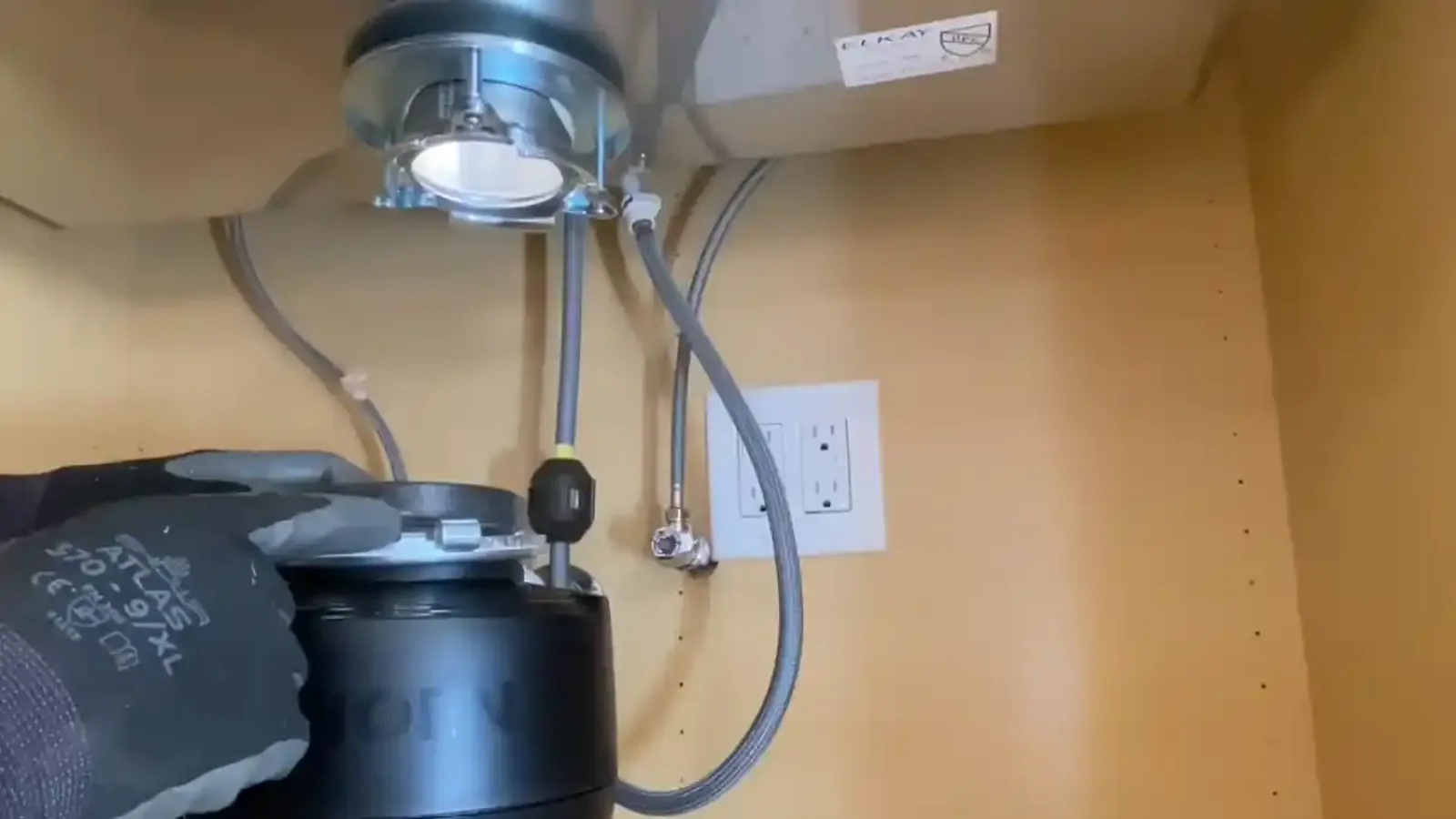
InSinkErator is the best-known brand of garbage disposal, and many Frankfort homes already have one. Replacing an old unit with a new one is a common weekend project, and installing the first disposal in a sink that never had one is a larger job. This guide walks through the steps, the checks to do first and the points where a plumber or an electrician is the safer choice.
A disposal is not right for every kitchen. Homes on septic systems, homes with old or fragile drain lines and homes where the sink drains slowly already are places to think before you add one.
Check these before you buy a disposal
- Your sink drain opening is a standard size that fits the mounting flange. Most standard kitchen sinks do.
- There is a switch or an outlet under the sink, and the circuit is protected as required. If not, an electrician should add one.
- The drain line and the trap are in good shape. A slow drain gets worse after a disposal is added.
- There is enough clearance under the sink. Larger models need more room and the tailpiece position matters.
- You know whether your home is on a septic system. Ask your septic company if a disposal is suitable.
- If you have a dishwasher, the unit has a knockout plug for the dishwasher drain, and you must remove it before connecting the hose.
The installation, step by step
Remove the old unit or the old strainer
Switch off the power at the breaker, disconnect the drain pipe, unhook the unit from its mounting ring and remove the sink flange.
Clean and set the new flange
Clean the sink opening and apply plumber's putty under the new flange. Tighten the mounting ring from below until the putty squeezes out and wipe the excess.
Wire the unit
If your disposal has a power cord, connect it to the outlet. If it is hardwired, connect the wires inside the unit's junction box according to the instructions. This is the stage where an electrician helps if the wiring is unclear.
Hang the disposal
Lift the unit onto the mounting assembly and twist it until it locks.
Connect the drain and the dishwasher
Attach the discharge elbow to the trap with the gasket in place, and connect the dishwasher hose with a clamp. Knock out the dishwasher plug first.
Test for leaks
Run water, switch the unit on and check every joint for drips from above and below.
Common installation mistakes and their effects
| Mistake | What happens | Fix |
|---|---|---|
| Forgetting to knock out the dishwasher plug | Dishwasher water cannot drain | Remove the plug from inside the unit. |
| Not enough putty under the flange | Leak at the sink | Reseat the flange with fresh putty. |
| Over-tightening the mounting ring | Cracks a sink or distorts the flange | Tighten evenly and stop when snug. |
| Drain line sloped wrong | Slow drain, standing water in the trap arm | Reset the trap arm with a slight downward slope. |
| Wired without a proper switch | Unsafe and not to code | Have an electrician add a switch or outlet. |
Using a disposal without causing clogs
Run a good flow of cold water before, during and for about half a minute after grinding, so that scraps travel past the trap and into the main drain. Cold water keeps grease firm so it is chopped up and flushed instead of smearing on the walls.
Avoid fibrous items like celery and corn husks, coffee grounds in quantity, eggshells in large amounts, pasta and rice, and bones. Do not put grease or oil down the drain, even with a disposal. If the kitchen drain slows after installing the disposal, our drain cleaning team can clear and inspect the line.
When to call a plumber instead
Call a plumber when the sink needs new drain piping, when the old unit is corroded in place, when the dishwasher connection leaks, or when the existing line drains slowly. A plumber also handles the case where the new disposal does not align with the trap because the cabinet layout has changed.
If an old disposal is leaking from its body, our garbage disposal repair page explains when a repair is possible and when replacement is the answer. A unit that leaks from its body cannot be sealed and should be replaced.
Septic and city sewer around Frankfort
Homes inside the Frankfort sewer service area connect to a city system, while homes on rural roads in Franklin, Woodford and Anderson counties may use septic tanks. If you are not sure which applies to your property, check your sewer bill or ask your septic pumper. A disposal adds solids to a septic tank and can shorten the time between pumpings.
Our pages for Versailles and Midway cover the nearby towns where many properties use septic systems. Ask your septic company before you add a disposal.
Source type: utility billing records and septic service guidance
Questions we hear about garbage disposal installation
It depends on your system. Ask the company that pumps your tank. Many recommend avoiding one or limiting use.
A like-for-like replacement is often an hour or two. A first-time installation that needs new wiring and drain work takes longer.
If there is no switch or outlet under the sink, yes, or you can ask our plumbers to coordinate. If a cord plugs into an outlet, no.
The putty may not have been seated evenly or the mounting ring is loose. Tighten evenly or reseat the flange.
Rules vary by sewer provider, and some utilities ask customers to limit grease. Ask your provider.