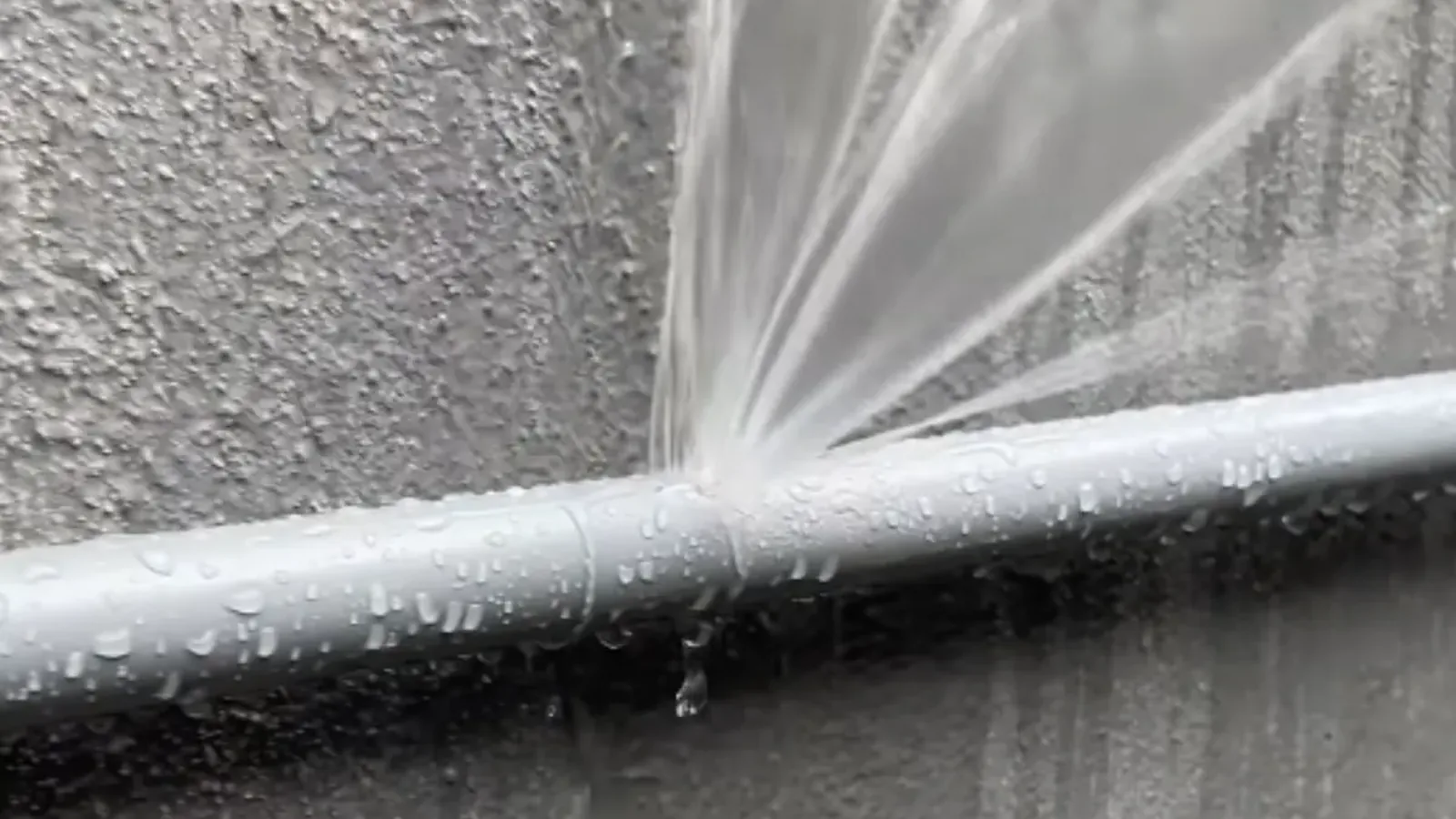
You turn on the kitchen faucet on a bitter morning and nothing comes out, or only a trickle. That is the classic sign of a frozen pipe. The ice inside the pipe blocks the flow and builds pressure behind it, and the pressure is what splits the pipe. The goal is to thaw the pipe slowly and to be ready for a leak the moment the ice melts.
This guide gives the steps for thawing a pipe safely, the methods that are dangerous and should never be used, and the signs that a pipe has cracked. It was written for homes in and around Frankfort, KY, where hard freezes arrive a few times each winter and an unheated crawl space or an exterior wall is often the culprit.
Thawing a frozen pipe, step by step
Open the faucet
Leave the tap open so that water has a path out as the ice melts and the pressure can ease.
Find the frozen section
Frozen pipes are usually in exterior walls, unheated basements, garages or crawl spaces. A section that is cold and frosty to the touch is the likely spot.
Apply gentle heat
Use a hair dryer, a heating pad wrapped around the pipe or towels soaked in hot tap water. Start near the faucet and work toward the frozen section.
Keep going until full flow returns
Do not stop when a trickle appears. Continue until the flow is strong and steady.
Check for leaks
Look along the pipe, in the walls and ceilings below, for drips or stains. If you see water, close the main valve and call.
What not to do: dangerous thawing methods
- Never use a propane torch, a blowtorch or any open flame on a pipe. It can ignite insulation and framing, and it can overheat the pipe and crack it.
- Never use a kerosene heater or a charcoal grill indoors to warm a space. They produce carbon monoxide.
- Never pour boiling water on a frozen pipe or a cold fitting. Rapid heating can crack a plastic or a metal joint.
- Never leave a heat source unattended near flammable material.
- Never ignore a frozen pipe once it thaws. If a split exists, water will start to flow, and you must be ready to close the main.
Where pipes freeze and what to look for
| Location | Why it freezes | Warning sign |
|---|---|---|
| Exterior wall under a sink | Cold air reaches the pipe behind the cabinet | Cabinet back is very cold. |
| Crawl space | Open vents and little insulation | Cold floor, frost on pipes. |
| Garage supply line | Unheated and drafty | Frost on exposed pipe. |
| Outdoor hose bib | Hose left attached | Dripping inside the wall after a thaw. |
| Attic line | Insulation placed above the pipe, not around it | Water stains on a ceiling after a cold night. |
Prevention before the next freeze
Open the cabinet doors under sinks on exterior walls during a hard freeze so room air reaches the pipes. Let a faucet drip, since moving water is slower to freeze. Disconnect and drain hoses and close the indoor valve to outdoor spigots if your house has one.
Wrap exposed pipes in foam sleeves, seal gaps around pipes where they enter the house and add insulation to crawl spaces. If you plan to be away in winter, keep the thermostat at a safe temperature and ask a neighbor to check the house. If a pipe in the house has split before, consider a permanent fix through burst pipe repair and rerouting the pipe to a warmer location.
When the pipe has already split
A split pipe often shows no leak while frozen, because the ice plugs it. The leak begins when the ice melts. That is why you should thaw with the main valve within reach. If you see water spraying or pouring, close the main, open the lowest tap and call a plumber.
A split pipe has to be cut out and replaced. A patch or a clamp is a temporary fix at best. Our burst pipe repair and leak detection pages explain what happens on the visit. If water damage is widespread, a drying company and your insurer need to be involved.
How cold Frankfort gets
The average January low in Frankfort is about 25 degrees Fahrenheit at Capital City Airport and about 22 downtown, according to the National Weather Service climate normals. Record lows reach well below zero. A sudden drop after a mild week is the pattern that freezes pipes in the walls of older houses.
In neighborhoods such as South Frankfort and the Corner in Celebrities Historic District, older houses may have pipes in exterior walls and in crawl spaces with little insulation. For towns nearby, our pages for Lawrenceburg and Versailles explain how we serve them in a freeze.
Source type: National Weather Service climate normals
Questions we hear about how to thaw frozen pipes
It depends on the length of the ice and the heat source. It can take from several minutes to an hour or more. Be patient and keep the tap open.
Yes. It lets water flow once the ice melts and relieves pressure.
Look for a sudden drop in pressure, water stains or sounds of running water. Check the meter with all taps off.
Start at the faucet and feel along the accessible pipes. If you cannot find it, call and we locate the freeze with the right tools.
If water is flowing from the street or the meter box, call your water utility. Frankfort Plant Board lists its customer service number on its website.