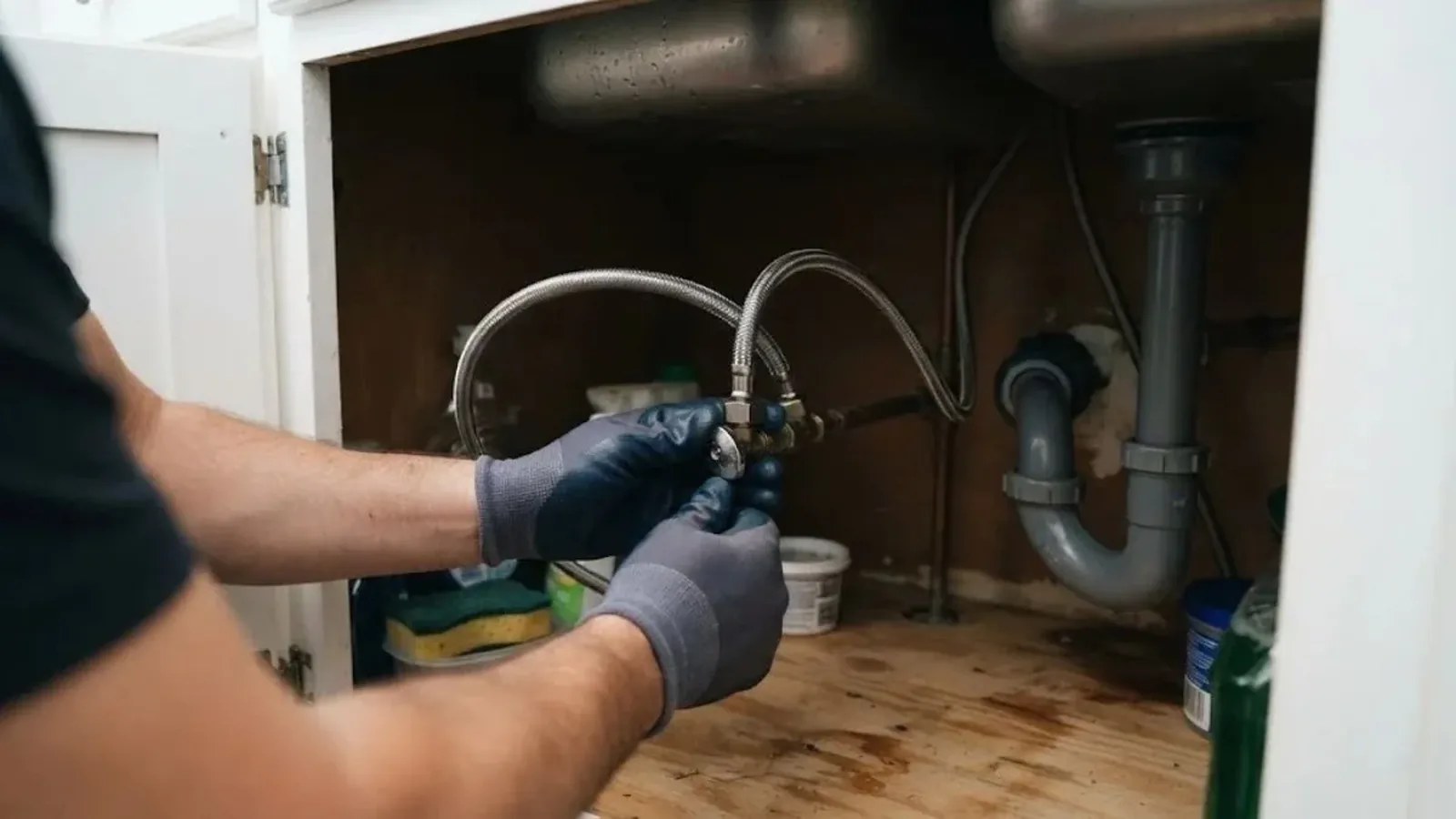
An under sink water filtration system connects to the cold water line below your kitchen sink and sends treated water to a separate small faucet or to the main faucet. Homeowners in Frankfort, KY usually ask about it for one of three reasons: taste or smell from the tap, a wish to reduce specific contaminants, or a plan to stop buying bottled water. The right system depends on which of those reasons applies to you.
Before you pick a filter, find out what is in your water and what you want to remove. A filter that claims to fix everything usually fixes little. A filter matched to a specific concern, with a data sheet that names the test standard it meets, is a much safer purchase.
Common under sink filter types
| Type | What it does | What to know |
|---|---|---|
| Carbon block | Reduces chlorine taste and odor and some organic compounds | Simple, low maintenance, replace cartridges on schedule. |
| Catalytic carbon | Built to reduce chloramine more effectively than plain carbon | Worth checking if your utility uses chloramine. |
| Reverse osmosis | Pushes water through a membrane to reduce dissolved solids | Needs a drain connection, a tank and more space, wastes some water. |
| Sediment pre-filter | Catches sand and rust particles | Often paired with another stage. |
| Specialty media | Targets a named contaminant such as lead | Needs a test or data sheet that names the contaminant. |
Start with the water report, not the sales page
Utilities that supply drinking water publish an annual consumer confidence report. It lists the source, the treatment and the measured results for regulated substances. Read the section on the disinfectant, since the disinfectant decides what a filter has to handle for taste and odor. If a specific result in the report concerns you, ask the utility for the full data or test your own tap with a certified lab.
Filters carry performance claims tested under standards published by NSF and ANSI. A label that names the standard and the substance it covers is a claim you can check. A label that says only that it filters impurities is not.
What to check before you buy
- The data sheet lists the standard and the exact substances the filter is rated to reduce.
- The cartridge replacement interval is realistic for your household's use, and the replacement cost is clear.
- There is enough room under the sink. Reverse osmosis units need space for the tank and a path to the drain.
- The unit fits the faucet or you are willing to add a separate faucet. A separate faucet needs a hole in the counter or sink deck.
- The water line has a working shutoff valve under the sink, since you will close it during installation and cartridge changes.
What a plumber does when installing one
Installation is usually a short visit. It is covered by our plumbing installation service, and the faucet side is covered under faucet repair if a new tap is part of the job.
Check the shutoff and supply line
We make sure the cold water valve works and replace it if it does not, because a valve that will not close makes every future cartridge change messy.
Mount the housing
The filter mounts to the cabinet wall with room below it to remove the cartridge without spilling.
Connect the lines
We use fittings that match the system, and we cut tubing square and push it fully into the fittings so it does not blow off under pressure.
Add the faucet or drain connection
A dedicated faucet needs a deck hole. A reverse osmosis system needs a saddle valve or drain adapter on the sink drain above the trap.
Flush and test
New cartridges need to be flushed before drinking. We check every fitting under pressure and watch for slow drips.
Maintenance matters more than the brand
A filter that is never changed becomes a place for buildup and a source of poor-tasting water. Mark the date of installation on the housing and set a reminder for the replacement interval. Reverse osmosis membranes last longer than carbon stages, but the pre-filters ahead of them need regular swaps to protect the membrane.
If water pressure at the filtered tap drops, the cartridge is usually clogged. If the unit leaks, check the fittings first and the housing o-ring second. A small leak under the sink can damage a cabinet floor before you see it, so look under the sink every few weeks.
Replace plastic tubing that has yellowed or become brittle. When you do any work on the sink, check the other connections as well. If a leak turns up, our leak detection team can trace it.
Frankfort water: what the utility reports
Frankfort Plant Board draws its water from pool 4 of the Kentucky River and treats it at its plant on Coffeetree Road. Its water quality report lists chloramines as the disinfectant. The report does not state a hardness figure, so the report is not enough to size a softener or decide on scale protection for a water heater. Ask the Plant Board for the current figure or test your tap with a hardness strip.
If you live in Versailles, Lawrenceburg or Midway, your water comes from a different provider. Look at your bill for the name of your utility, and read that utility's own report. Our pages for Versailles and Lawrenceburg explain how we handle service in those towns.
Source type: published utility water quality report
Questions we hear about under sink water filtration
Treated water meets the regulatory standards the utility must follow. A filter is a personal choice for taste, odor or a particular concern. If you want one, choose a unit rated for what you want to reduce.
Plain carbon reduces chlorine well but handles chloramine less effectively. Look for a filter whose data sheet names chloramine reduction, or ask a plumber to recommend one.
It depends on the model and on your water use. Most manufacturers list an interval in months or gallons. Follow the data sheet.
Many homeowners do. A plumber helps when the shutoff valve is stuck, a faucet hole must be drilled or a drain connection is needed.
The utility's published report does not state a hardness figure, so ask the Plant Board for the current number or test your tap before buying a softener or scale filter.