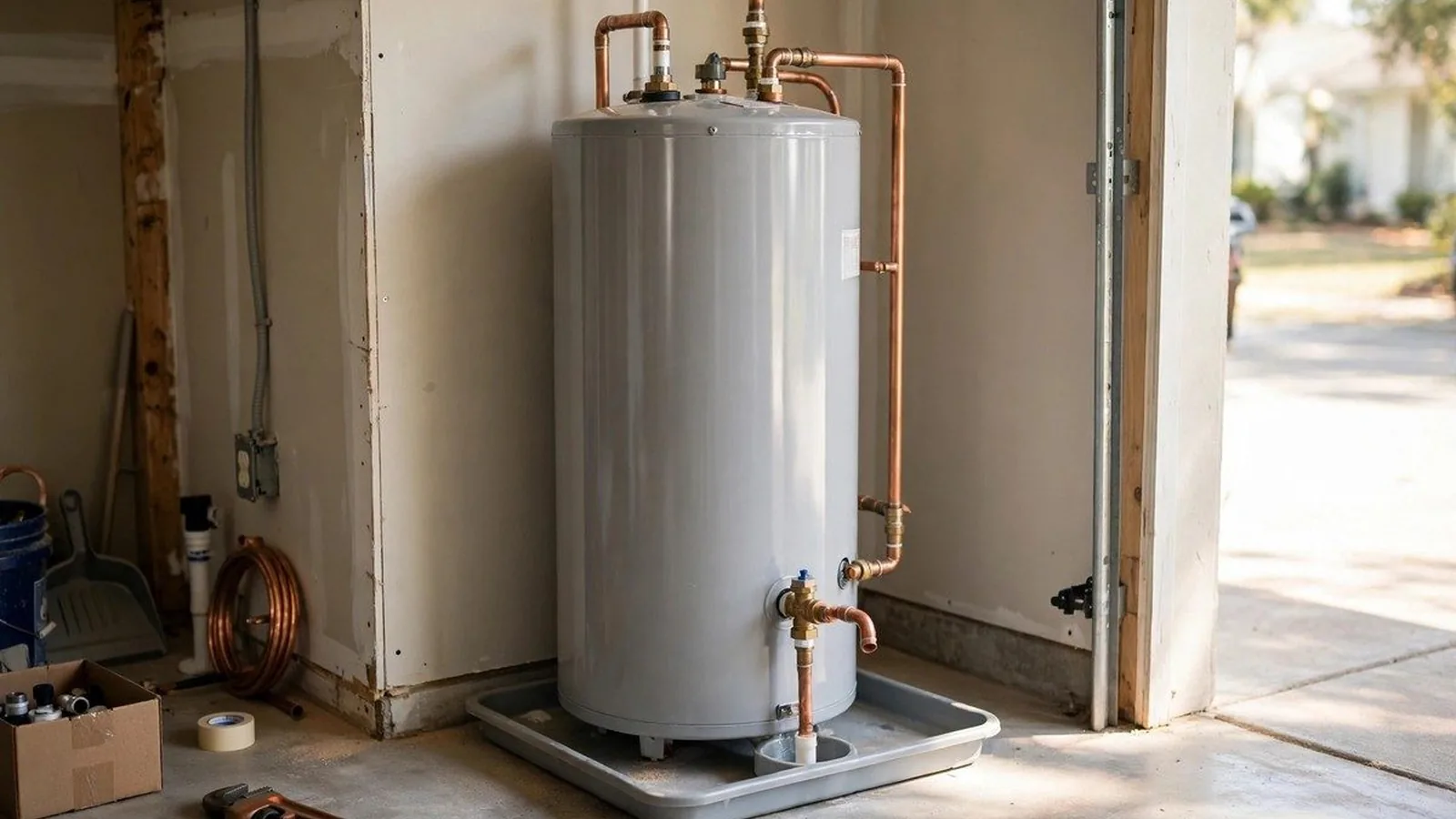
An electric water heater has two thermostats, one at the upper element and one at the lower. They tell the elements when to heat and when to stop. When a thermostat fails, you may get water that is lukewarm, water that is too hot, a breaker that trips or a heater that does not heat at all. Replacing one is a short job for someone who knows how to work safely around a live electrical circuit.
This guide explains how to tell a thermostat problem from a heating element problem, what a safe replacement involves and why we recommend a plumber or an electrician for most homeowners. It applies to electric tank heaters. Gas heaters have a different control, covered in a separate guide on our site.
Symptoms and the part to suspect
| Symptom | Likely part | Notes |
|---|---|---|
| No hot water at all | Upper thermostat or high-limit switch | Check the breaker and the red reset button first. |
| Lukewarm water | Lower element or lower thermostat | Water from the top of the tank is warm, the rest is not. |
| Water too hot | Thermostat stuck closed | Dangerous. Turn the power off and call. |
| Breaker trips repeatedly | Shorted element or thermostat | Do not keep resetting. |
| Water heats, then runs out quickly | Lower element failure or sediment | See water heater repair. |
Safety first: before you touch the heater
- Turn off the breaker for the water heater at the panel, and then check with a voltage tester at the heater that the power is off. Do not trust the switch alone.
- Label the wires or take a photo of the wiring before you disconnect anything.
- Never touch the terminals with a tank that has been wet or leaking. If water is present, stay out and call.
- If your heater is in a tight closet, make sure there is light and room to work.
- If you are uncomfortable working near a live panel or a wire nut, stop and call a professional.
How a thermostat replacement goes
Power off and verify
We shut off the breaker and confirm there is no voltage at the heater.
Remove the access panels and insulation
Panels cover each thermostat. Insulation behind them is set aside and put back later.
Test the old parts
We test the thermostat and the element with a meter so we replace the part that failed, not just the one that is easiest to reach.
Install the new thermostat
The new part snaps into the bracket and sits flat against the tank, since contact with the tank wall is how it senses temperature.
Reconnect, set the temperature and test
We reconnect the wires, restore power, set the temperature and check that the elements heat in the right sequence.
What a safe temperature setting looks like
Many heaters ship with the thermostat set to a high temperature. Very hot water raises the risk of scalding, especially for children and older adults.
According to the U.S. Department of Energy, 120 degrees Fahrenheit is a common setting for households. Higher settings reduce the risk of bacteria growth in the tank, so there is a balance, and the right choice depends on who lives in the home and what the heater manual states.
If you change the setting, wait several hours and measure the temperature at a tap with a thermometer. A thermostat that does not hold its setting is a sign it is worn and should be replaced.
When the thermostat is not the problem
Thermostats sit next to elements, and the two fail in similar ways. A heater that blows breakers could have a shorted element. A heater that makes a rumbling noise may have sediment, and a leaking tank is a replacement, not a repair. If a heater is more than about a decade old, spending money on parts may not make sense.
We test both parts and give you the numbers. If replacement is the better call, the water heater replacement page explains the process.
A short maintenance routine that protects the thermostats
Flush a few gallons from the drain valve each year to carry out sediment, and test the relief valve by lifting its lever briefly with a bucket below. Sediment insulates the lower element and the thermostat from the water, which makes both work harder and fail sooner.
Listen to the heater as well. A heater that runs for a long time with no hot water drawn, or one that takes far longer to recover than it used to, is telling you that a part is wearing out. Catching that early costs less than waiting for a cold shower to confirm it.
Frankfort electricity and water details
Heater work involves electrical code, plumbing code and sometimes local permit rules. We do not state a rule from memory. Ask the building department for your address whether a permit applies to a thermostat or element replacement. Kentucky licenses plumbers through the Department of Housing, Buildings and Construction, so ask any plumber for a license before work.
Hard water speeds up element failure. The Frankfort Plant Board's water quality report does not state a hardness number, so ask the utility or test your tap. For towns around Frankfort, see our Lawrenceburg and Midway pages.
Source type: published utility water quality report and state licensing guidance
Questions we hear about water heater thermostat replacement
A meter test is the only certain way. Symptoms overlap, so we test both with the power off.
It is possible, but it involves live wiring. If you are not experienced with electrical work, hire a licensed professional.
It is a high-limit switch on the upper thermostat that trips when the water gets too hot. If it trips repeatedly, there is a fault.
Some ticking is normal as metal expands. Popping and rumbling mean sediment.
Both gas and electric are in use around town. Check the label on your tank.