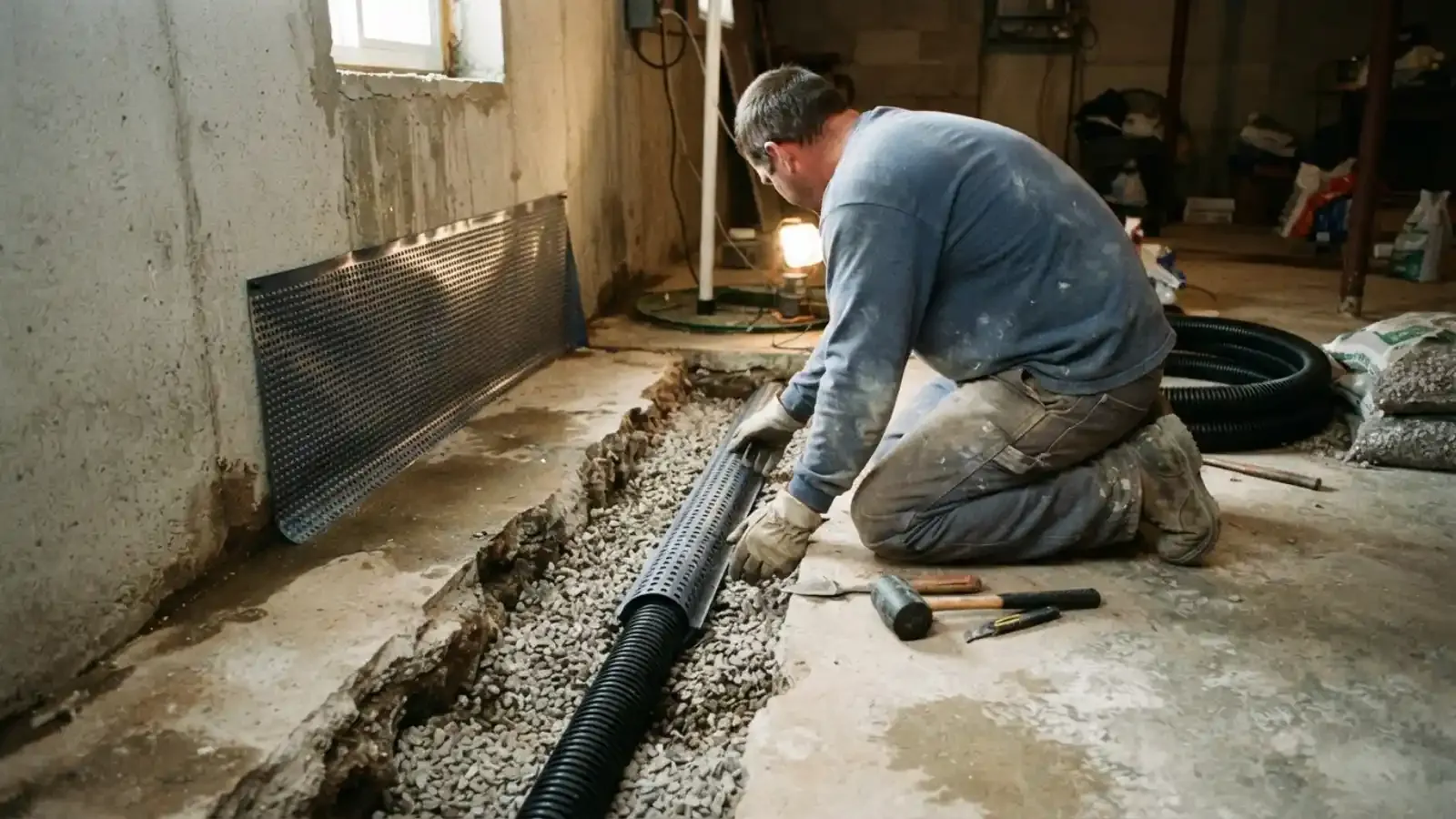
Basement waterproofing in Frankfort, KY, as a plumber does it, means giving groundwater a route out of the house. That includes interior drain channels, drain tile along the footing, a sump pit and pump, a battery backup, a discharge line that runs away from the foundation and a backwater valve on the sewer line where it is appropriate.
Waterproofing is a planned project. If water is coming in now, see sump pump repair and call the 24/7 line. If the wall has large cracks or the foundation is moving, a structural contractor or engineer should look at it. We tell you plainly when the problem is outside plumbing.
Where basement water comes from and what answers it
| Source | What you see | Plumbing-side response |
|---|---|---|
| Groundwater pressure | Water at the floor-wall joint after rain | Interior drain and sump pump. |
| Poor discharge or downspouts | Water near the wall in one spot | Extend downspouts and the sump discharge away from the house. |
| Sewer backup | Water from a floor drain | Backwater valve, main line cleaning or repair. |
| Plumbing leak | Damp wall or floor, no rain link | Leak detection. |
| Window well flooding | Water through a basement window | Window well drain tied to the system. |
| Foundation cracks | Water through the wall itself | Refer to a structural contractor. |
Interior drain, sump and discharge: the system
An interior drain is a channel along the base of the basement wall, below the floor, that catches water seeping in and carries it to the sump pit. The pit holds a pump that lifts the water out through the discharge line. Each part is simple, and the system works only when all of it does.
The discharge matters as much as the pump. Water that is discharged next to the foundation returns to the pit and cycles forever. We route it to ground that slopes away, and where possible to a storm drain or a place the property owner has the right to use. We do not discharge to a neighbor's land or to the sanitary sewer.
How a waterproofing project runs
Diagnose
We look at where and when the water enters, the grade outside, downspouts and the existing pump and drains.
Plan the system
We recommend the pieces that match the problem and tell you what we would not do.
Cut and install
We open the floor along the wall for the drain channel, set the pit and pump and run the discharge.
Test
We run water through the system and confirm the pump cycles and the discharge clears.
Add protection
We recommend a backup pump and an alarm.
The Kentucky River, rain and Frankfort basements
Frankfort gets about 47 inches of precipitation in a typical year, and the city sits in the Kentucky River valley with hills on several sides. Water from rain moves downhill and collects in the low spots. The December 1978 flood put more than half of downtown under water, and flooding in April 2025 prompted evacuations.
Flood protection is a separate subject from basement drainage. If you live in a flood zone, ask your insurance agent about flood coverage, since standard homeowner policies commonly exclude river flooding.
Window wells, downspouts and the first few feet outside
Water that reaches a basement often started on the roof. Downspouts that empty beside the foundation put hundreds of gallons against the wall in a single storm, and a window well without a drain turns into a bathtub beside the glass. Fixing those first costs far less than any interior system.
A plumber can tie a window well to the drain system, connect downspout extensions to a buried line that carries water away from the house and check that no roof water is sent to the sanitary sewer. If the soil beside the house slopes toward the wall, a landscaper or a grading contractor is the right person for that part of the job.
What affects waterproofing cost
Length of interior drain
A single wall is smaller than a perimeter.
Pump and backup
Pump type, horsepower and backup options change the price.
Discharge route
A long run, or one that crosses a driveway or yard, adds work.
Floor finish
Concrete is cut and patched. Finished floors add restoration.
Related work
Gutters, grading and foundation repair are separate scopes.
Need an actual figure? Call, tell us how the water shows up and we plan a walkthrough.
Questions we hear about basement waterproofing
No. We handle the plumbing side, which is drains, sump pumps and discharge. Structural cracks need a foundation contractor or engineer, and we tell you when that is the case.
Many take one to three days depending on length and floor type. We give you a schedule up front.
If water enters from groundwater, a pump with a drain system often does. If water enters through cracks, from a roof or from a sewer backup, other fixes are needed.
We recommend it. Storms that fill the pit often cut the power.
Yes. Heavy rain reaches basements in Versailles, Lawrenceburg and Midway as it does in Frankfort, and the same drain and sump designs apply.