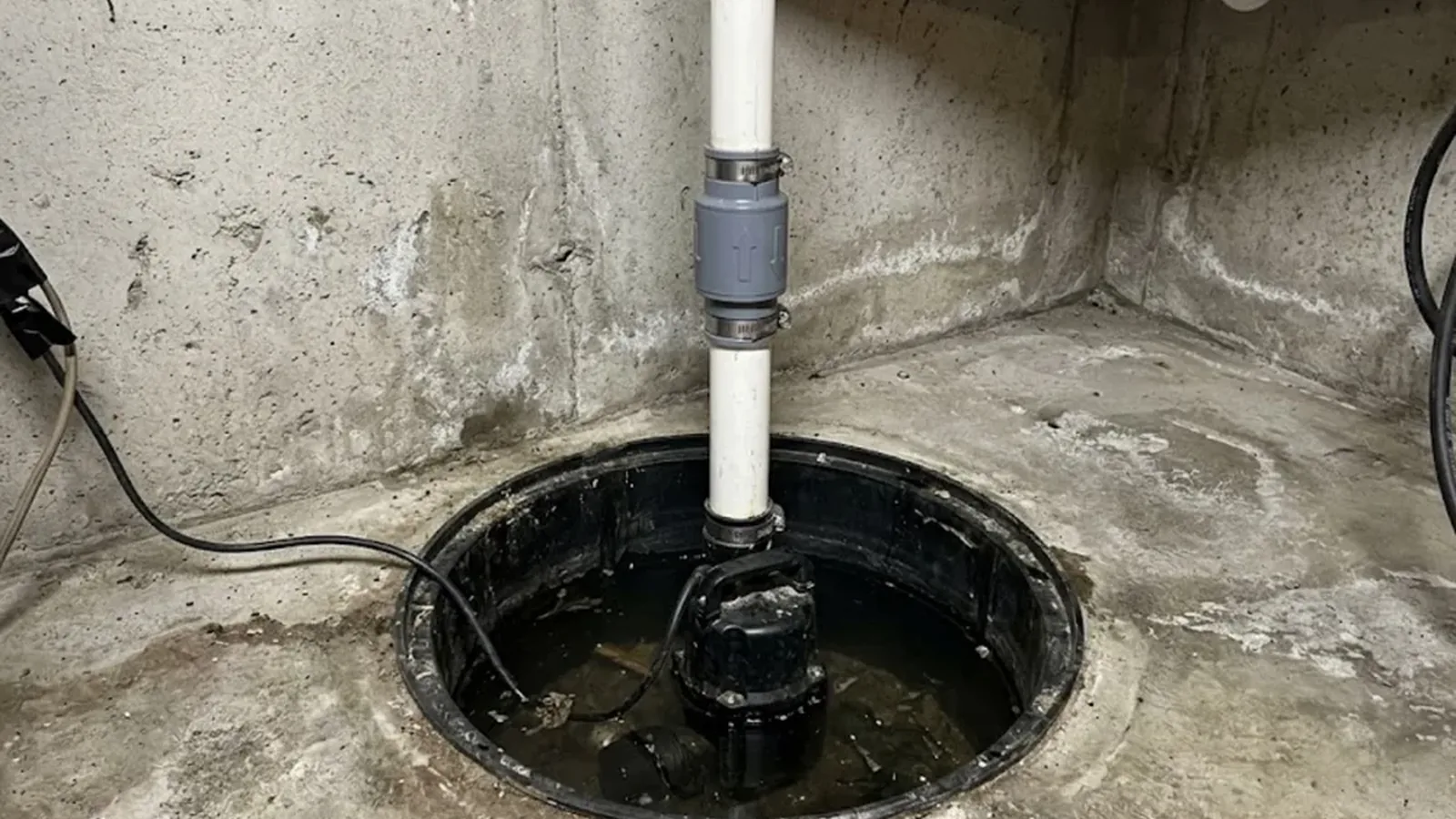
Emergency sump pump repair in Frankfort, KY matters most when a heavy rain is under way and the pit is filling. If the pump is silent and the water is near the top of the pit, check that it is plugged in and the breaker has not tripped, lift the float switch by hand to see whether the pump starts, and call our 24/7 line.
Move valuables off the basement floor while you wait. If water is coming from a pipe and not from the ground, our leak detection team handles that instead.
A sump pump sits in a pit in the lowest part of the house and sends groundwater out through a discharge pipe so it does not rise into the basement. Pumps fail from stuck floats, clogged intakes, burned motors, failed check valves and power outages. A battery backup covers the last one.
Pit filling and pump not running
- Check that the pump is plugged into a working outlet and the GFCI has not tripped. Reset the breaker if it has.
- Lift the float with a stick. If the pump starts, the float was stuck. If it does not, the pump or its power is the problem.
- Look at the discharge pipe outside. A blocked or frozen discharge keeps the pump from emptying the pit.
- Pour a bucket of water into the pit and watch whether the pump clears it and does not cycle too often.
- Move boxes and electronics off the floor. Do not wade into standing water if the water is near outlets or the panel.
Sump pump problems and the repair
| Symptom | Likely cause | Fix |
|---|---|---|
| Pump never starts | Dead motor, bad float or no power | Replace the pump or float, restore power. |
| Runs but moves little water | Clogged intake, worn impeller or failed check valve | Clean or replace. |
| Cycles on and off rapidly | Check valve missing, pit too small or float misplaced | Reposition the float, add a check valve. |
| Loud noises | Debris in the impeller or worn bearings | Clean or replace. |
| Fails during outages | No battery backup | Install a battery or water-powered backup. |
| Discharge freezes | Short run to a cold exterior | Reroute or add a freeze-resistant outlet. |
Why Frankfort basements see water
Frankfort receives about 47 inches of precipitation in a typical year at the airport, according to the National Weather Service 1991 to 2020 normals. The city also sits beside the Kentucky River, which has flooded the lowest parts of town many times. Houses near the river, in low pockets or at the bottom of a slope can see groundwater rise quickly after a storm.
A sump pump is the first line of defense, and a battery backup is the second. If the pit keeps filling even with a working pump, see our basement waterproofing page for interior drains and discharge. Storms often bring power outages, and the same storm that fills the pit may be the one that takes the pump offline. A backup that runs on a battery or on city water pressure keeps the pit pumped through an outage.
If your basement takes water even with a working pump, the problem may be the discharge location. Water that is discharged too close to the house returns to the pit. Extend the discharge pipe away from the foundation and direct it to ground that slopes away.
What a sump pump visit includes
Check power and float
We test the outlet, the cord and the float switch first.
Test the pump under load
We run water into the pit and watch the cycle, flow and noise.
Inspect the discharge
We check the pipe run, the check valve and the outlet for blockage or freezing.
Repair or replace
A stuck float is a small repair. A burned motor means a new pump, sized to the pit and the inflow.
Add backup protection
We discuss a battery backup and an alarm so you know before the pit overflows.
Floods and the sump pit
Kentucky River flooding in December 1978 put more than half of downtown Frankfort under water, and river flooding forced evacuations again in April 2025. A sump pump handles groundwater and seepage. It does not stop a river from entering a house. When the river is high, water pressure from outside the foundation can overwhelm any pump, and the right response is to protect people and call for help.
After a flood, have the pump and discharge checked, and ask our Midway and Versailles crews about service there. Silt in the pit and the check valve is a common cause of failure the next time it rains.
What shapes sump pump pricing
Pump type
Submersible and pedestal pumps differ in price and in lifespan.
Horsepower and flow
A bigger inflow needs a stronger pump.
Backup system
A battery or water-powered backup is a separate purchase and install.
Pit and discharge work
A new pit or a rerouted discharge adds labor.
After-hours dispatch
Storm calls at night carry an on-call charge, stated first.
Ready to price the work? Call and describe the pump and what it is doing.
Questions we hear about sump pump
Yes. Storm calls are the reason the line is staffed overnight. Call while rain is still falling, and move valuables off the floor while you wait.
Many last around seven to ten years, though heavy use shortens that. Test yours at the start of each wet season and replace it if it is noisy, slow or cycling often.
A second pump with its own battery that runs when the power fails or the main pump fails. It protects the basement during an outage.
No. It handles groundwater that collects in the pit. River flood protection is a separate matter.
A high water table, a failing check valve that lets water drain back, or a leaking water line near the pit can all do it. We trace the source.