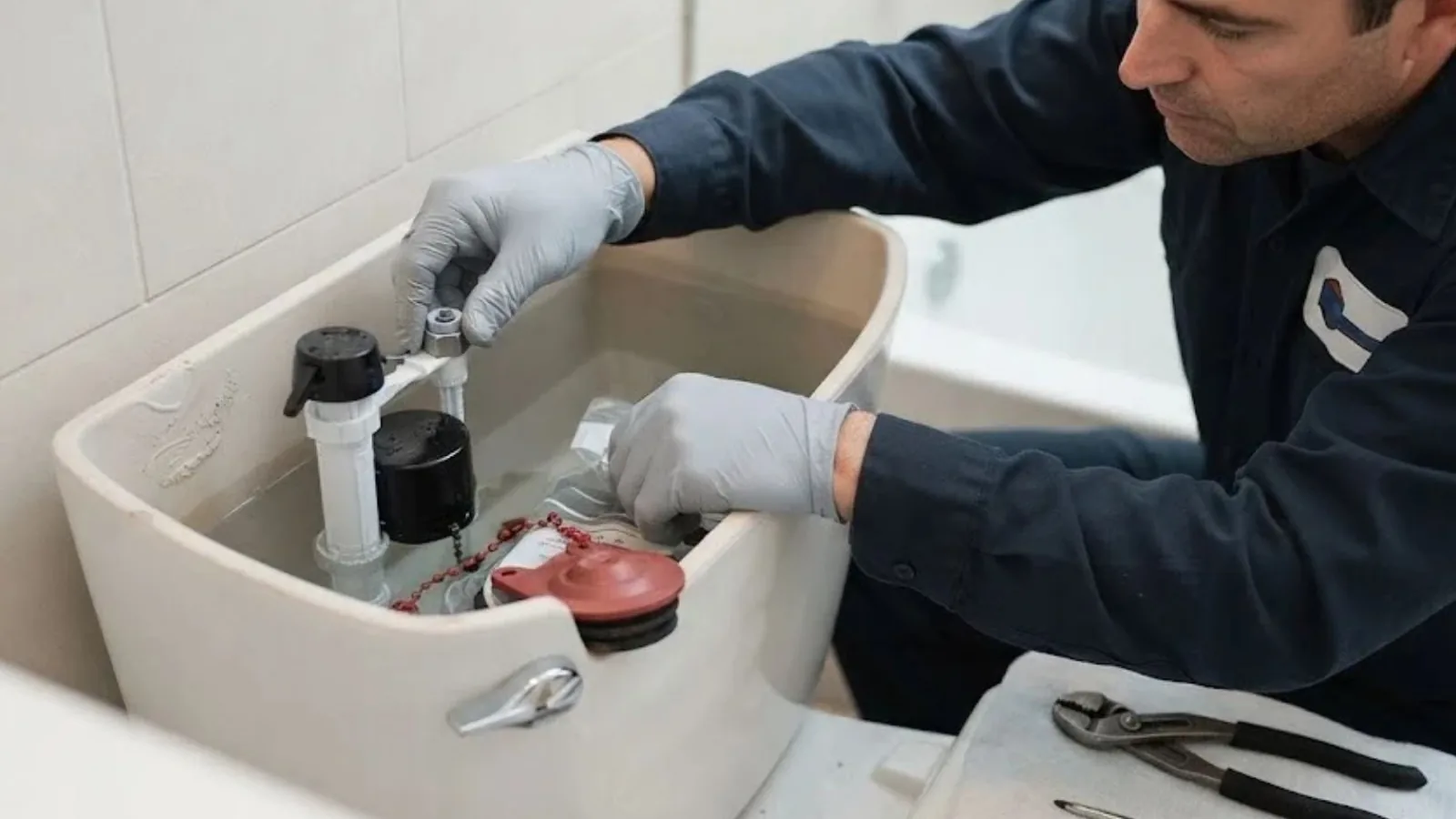
A crack in a toilet is one of those problems that looks small and can turn out to be expensive. A hairline craze in the glaze is usually cosmetic. A crack that goes through the porcelain can leak slowly onto the floor, and a crack in a tank can split without warning. Knowing the difference lets you decide whether to monitor the toilet or shut it off today.
This guide covers the types of cracks, the quick test for a leak, what repair options exist and when replacement is the better choice. It also covers what to do in the first few minutes if the toilet is leaking now.
Types of toilet cracks
| Crack | What it looks like | Severity |
|---|---|---|
| Crazing | Fine web of lines in the glaze, no leaking | Cosmetic, monitor. |
| Hairline crack in the bowl above the waterline | Thin line that does not leak | Monitor, may worsen. |
| Crack in the bowl below the waterline | Water level drops, damp floor | Serious, replace. |
| Crack in the tank | Water seeps down the outside of the tank | Serious, replace the tank or toilet. |
| Crack at the base or flange | Rocking toilet, water at the base | Serious, check the floor and flange. |
| Crack near the bolt holes | Caused by over-tightening | Replace the toilet. |
If the toilet is leaking now
- Close the supply valve behind the toilet by turning it clockwise.
- Flush once to empty the tank and the bowl as much as possible, then soak up any water on the floor.
- Put a towel and a bucket under the leak and keep people from using the toilet.
- Photograph the crack and the damage for insurance and for the plumber.
- Call us. If the floor around the toilet is soft or stained, tell us so we check the subfloor.
The simple leak test
To test a bowl crack, dry the outside of the bowl and the floor around it. Place a few sheets of dry paper towel around the base and under any suspicious area. Wait an hour without flushing and check the paper for dampness. Add a few drops of food coloring to the tank and wait to see if colored water appears where it should not.
A crack in the tank can seep slowly, so the first sign may be a stain on the floor under the tank or a damp spot behind the toilet. Check regularly after you spot a crack, since cracks tend to lengthen.
Can a cracked toilet be repaired?
Epoxy and porcelain repair kits can seal a hairline crack in a place that does not hold water or take stress, such as a chip on the rim. They are not reliable for a crack that holds water or sits under load, since porcelain flexes slightly and a patch can fail without warning.
A cracked bowl or tank that leaks is a replacement, not a repair. The safe course is to install a new toilet. Our toilet repair team removes the old one, checks the flange and the floor, and sets a new toilet on a new wax ring.
What replacement involves
Shut off and drain
We close the supply, flush and drain the tank and remove the supply line.
Remove the old toilet
We lift the toilet off the flange, cap the drain opening to block sewer gas and scrape off the old wax.
Check the flange and floor
A flange that is cracked or sunk below the floor surface needs a repair before a new toilet goes on.
Set the new toilet
A new wax ring and new closet bolts go in, and the toilet is leveled and tightened evenly.
Connect and test
We attach the supply line, fill the tank and test several flushes while checking the base for leaks.
Why toilets crack
Over-tightening of the closet bolts or tank bolts is the most common cause, since porcelain does not give. Temperature shock is another, for example pouring very hot water into a cold bowl on a freezing morning. Impact from a heavy object can do it too.
According to the EPA's WaterSense program, a labeled replacement toilet uses 1.28 gallons per flush or less. In cold weather, a toilet in an unheated room can freeze and crack. If you have a seasonal cabin or a bathroom in an outbuilding, drain the bowl and the tank before a hard freeze, and read about prevention on our burst pipe repair page.
A quick check you can do every season
Once a season, wipe the toilet dry and run a flashlight along the bowl, the tank and the base. Look for new lines, rust stains at the bolts and any dampness on the floor. Rock the toilet gently by the bowl, since any movement means the bolts or the seal need attention.
Kentucky licensing and your plumber
Kentucky licenses plumbers through the Department of Housing, Buildings and Construction, Division of Plumbing, under 815 KAR 20:030. You can ask any plumber for a license and verify it through the department. Permit rules for a simple toilet swap vary with the address, so ask the local building department whether one applies. For homes in Versailles or Lawrenceburg, the rules may differ, and our pages for Versailles and Lawrenceburg explain how we serve those towns.
Source type: state licensing regulation and department guidance
Questions we hear about toilet crack repair
A crack above the waterline that does not leak is usually cosmetic. Monitor it, and replace the toilet if it grows or begins to leak.
Epoxy can seal a small chip, but it is not reliable on a crack that holds water. Replace a leaking toilet.
The closet bolts may be loose, the wax ring may have failed or the flange may be damaged. A rocking toilet can crack or leak, so have it checked.
If it is leaking, yes. Shut the valve and stop using it. If it is only crazed, you can wait.
Older homes may have worn flanges, soft subfloors or old cast iron drains. We check those before setting a new toilet.