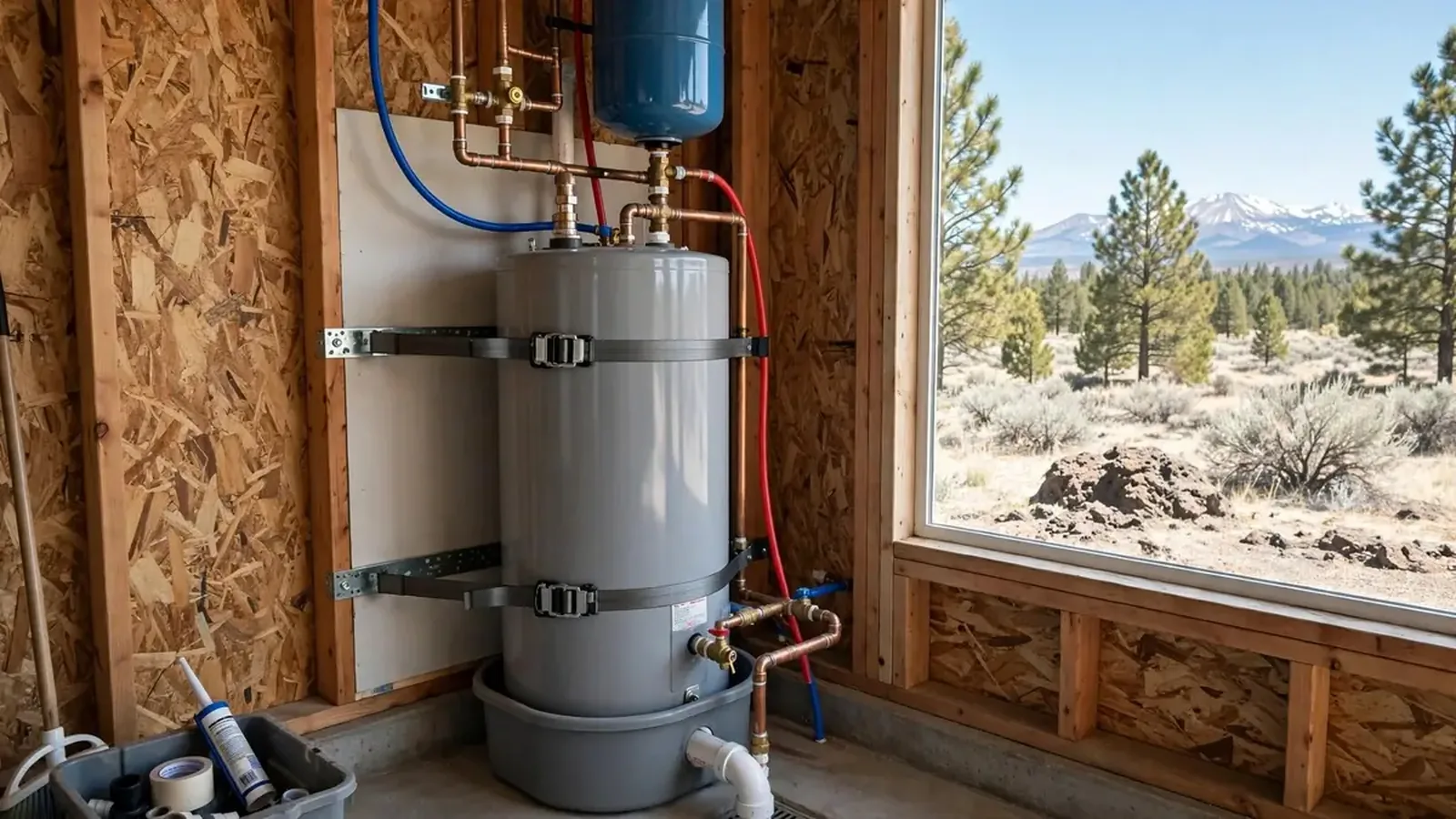
Water heater installation in Frankfort, KY is the planned job of putting in a new tank, tankless or hybrid unit, whether you are replacing an aging heater before it fails, remodeling, or moving the unit to a better spot. A good install matters as much as the heater itself, because most early failures trace back to poor venting, missing expansion control or an undersized unit.
This page covers a planned install. If your tank is already leaking, see emergency water heater replacement, where the same crews handle urgent calls.
Sizing a heater to the household
The label capacity is only half the story. What counts is how much hot water the house needs at its busiest hour. A family that showers in the morning and runs a dishwasher and washer at the same time needs more recovery than two people living alone. We ask how many bathrooms you have, how many people use them in the same window, and whether there is a soaking tub or a body spray shower.
A tank that is too small runs out of hot water and runs the burner constantly. A tank that is far too big wastes energy. We size to the real load and tell you why.
Install options side by side
| Option | Typical setup | Installation points to check |
|---|---|---|
| Gas tank | Existing gas line and flue | Gas sizing, venting, combustion air, sediment trap. |
| Electric tank | Dedicated 240 volt circuit | Breaker and wire size, drain pan, discharge line. |
| Tankless | Wall mounted, gas or electric | Gas line capacity or electrical service, venting, a way to flush the unit. |
| Hybrid heat pump | Needs air volume and a drain | Clearance, condensate drain, noise and room temperature. |
Closed water systems with a check valve or pressure regulator need an expansion tank. We check this on every install.
What a clean install looks like
Walk the site
We look at the location, the existing connections, the venting path and the shutoff valves before we quote.
Prepare the area
Old tank out, a drain pan where needed, a level base, and a discharge line from the relief valve that runs where it is safe.
Connect and protect
New connectors, a shutoff valve within reach, an expansion tank where the system needs one, and a relief valve rated for the tank.
Fuel and venting
Gas connections get a leak test. Vent pipe is sloped and sealed. Electrical connections are checked and labeled.
Start up
We fill, purge air, set the temperature, run hot water and walk you through shutoff points.
Gas safety and permits in plain terms
A gas water heater shares your home with a flame and a flue, so the venting and the gas connections deserve care. If you ever smell gas, leave the building and call 911 and your gas utility. Columbia Gas of Kentucky publishes its 24/7 emergency number as 1-800-432-9515 on its website, and the same number is worth saving to your phone if Columbia Gas serves your address. Check your bill to confirm your utility.
Permit requirements vary by location and by type of work, so ask your building department what applies. Model plumbing and fuel gas standards set the rules for venting and clearances, and states adopt and amend them, so confirm which edition applies at your address. A licensed plumber should know the local steps and should tell you who handles them.
What shapes an installation quote
Unit size and type
Tank, tankless and hybrid differ in equipment cost and in labor.
Venting and gas work
Reusing a good flue costs less than running a new one.
Electrical work
A new circuit or panel work for an electric or hybrid unit adds a separate scope.
Code accessories
Pans, discharge lines, expansion tanks and shutoffs are included where they are needed.
Where it goes
Moving the unit or running new lines costs more than a swap in place.
Planned work is quoted in writing before we start. Need to budget for it? Call and describe the heater you have now.
Maintenance after the install
Once a year, flush a tank heater to clear sediment, test the relief valve and check the anode rod. Tankless units need descaling on a schedule that depends on water hardness. Frankfort Plant Board's published water quality report does not list hardness, so ask the utility or test your tap, then set the interval to match.
If a problem shows up later, our water heater repair page covers diagnosis and the common failed parts. Keep the date of installation handy, since it helps us judge wear.
Questions we hear about water heater installation
A like-for-like tank swap is usually a half day. Tankless conversions, venting changes or new circuits take longer, and we tell you the time before we start.
If your system has a check valve or a pressure regulator, heated water has nowhere to expand and pressure rises. An expansion tank handles that. We check for it on every installation.
It can be, for example to shorten pipe runs or free up a closet. It adds piping, venting or electrical work, so we price it as a separate scope.
Often yes, but gas line size, venting and electrical capacity decide it. The tankless water heater page explains what we check.
The heater itself carries the manufacturer's warranty. Ask us for the terms that apply to the specific unit and to labor before you approve the quote.