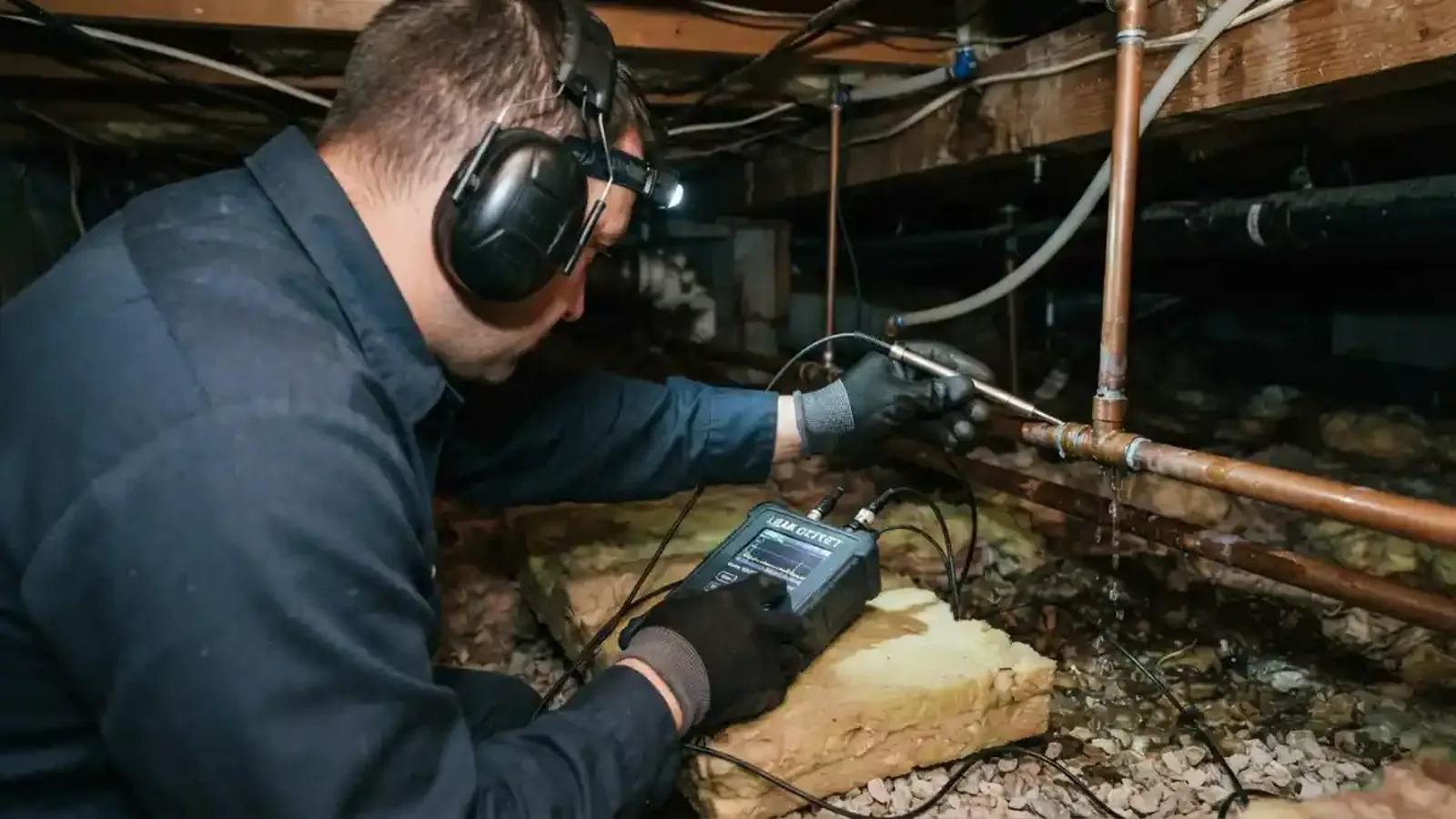
A water system leak is a leak in the pipes that bring water into and through your house. Unlike a drain leak, it is under pressure, so it runs all the time and wastes water around the clock. The first sign is often a bill that rises with no change in habits, or a meter that moves when you are not using water.
This guide shows how to run a meter test at home, how to check the usual suspects like toilets and hose bibs and when a plumber with listening equipment is the right next step. It also covers what to do about a leak you find.
The meter test, step by step
Turn everything off
Close every faucet, stop the washer and dishwasher and make sure no one flushes a toilet.
Read the meter
Open the meter box and note the reading, or watch the small leak indicator, a triangle or a dial that spins when water flows.
Wait
Wait fifteen to thirty minutes without using water.
Read it again
If the reading changed or the indicator moved, water is going somewhere.
Close the main
Turn off the main valve inside the house and check the meter again. If it stops, the leak is inside the house. If it keeps running, the leak is between the meter and the house.
Where to look first
| Place | Quick test | Likely fix |
|---|---|---|
| Toilets | Food coloring in the tank, check the bowl after fifteen minutes | Replace the flapper, see toilet repair. |
| Faucets and hose bibs | Look for drips and damp ground near the outdoor spigot | Replace washer or cartridge. |
| Water heater | Look for dampness around the base and the relief valve line | Repair the fitting or replace the tank. |
| Under sinks and behind appliances | Feel supply lines with a dry paper towel | Tighten or replace the line. |
| Irrigation | Shut off the system and recheck the meter | Repair the broken head or line. |
| Service line | Meter runs with the main closed | Service line repair. |
Hidden leaks and how they are found
A leak inside a wall, under a slab or in a buried line needs tools to find. Pressure testing isolates sections of the system. Acoustic equipment listens for the hiss of water escaping from a pipe. Thermal cameras reveal temperature differences where hot water leaks, and moisture meters find wet material behind finished surfaces.
The aim is to narrow the leak to a small area before opening anything. After the repair, we test again to confirm the meter is still. See our leak detection page for the full list of what we do.
Clues that point to a hidden leak
- Water bill higher than usual with no change in habits.
- Sound of running water when everything is off.
- Damp spots, stains or bubbling paint on walls and ceilings.
- Warm spots on the floor, which can mean a hot water line under a slab.
- Musty smells or mold in an area that should be dry.
- Low water pressure throughout the house.
What to do once you find a leak
Close the nearest shutoff. Take photographs of the damage and the leak for your insurance. Dry what you can.
Call a plumber for a repair and, for any significant water damage, a drying company. Mold can start in a day or two in a damp wall, so speed matters.
If the leak is on the service line from the meter to the house, it is typically the homeowner's responsibility, and our water service line repair crew handles it. If the water runs through a pipe that is failing in many places, a repiping quote may be the better long-term answer.
Seasonal checks that catch leaks early
Check under every sink and behind the toilets twice a year, and look at the ceiling below any upstairs bathroom. Run your hand along supply lines and feel for moisture. A dry paper towel held against a joint shows a slow drip that your eyes miss.
Check the water heater, the washing machine hoses and the ice maker line at the same time. Rubber washer hoses fail without warning, and replacing them with braided stainless hoses every few years is cheap protection. A water alarm placed on the floor near the heater or the washer gives an early warning for the cost of a few dollars.
Reading a Frankfort Plant Board bill and meter
Frankfort Plant Board bills customers for water by usage, and its meters register flow with a dial or digital display. Your bill lists the usage for the period, so a rise from one month to the next is a clue. If you cannot find a leak, ask the utility whether it can check the meter reading and whether it offers any help or adjustment after a leak, since policies differ and we do not assume one.
The utility's water quality report states the source as pool 4 of the Kentucky River and the plant on Coffeetree Road. Towns around Frankfort, such as Versailles and Midway, have their own providers, and our pages for Versailles and Midway explain how we serve them.
Source type: utility published reports and billing information
Questions we hear about water system leak detection
Run the meter test above. Movement with everything off means a leak.
According to the EPA's WaterSense program, the average household's leaks waste nearly 10,000 gallons of water each year. A steady drip can waste many gallons over a month. A larger leak, like a running toilet, can waste far more.
Sometimes as a warm spot or a damp patch. Often it does not, and listening equipment is needed.
Usually the homeowner. Confirm with your utility.
Sudden damage is often covered, gradual leaks often are not. Ask your carrier.