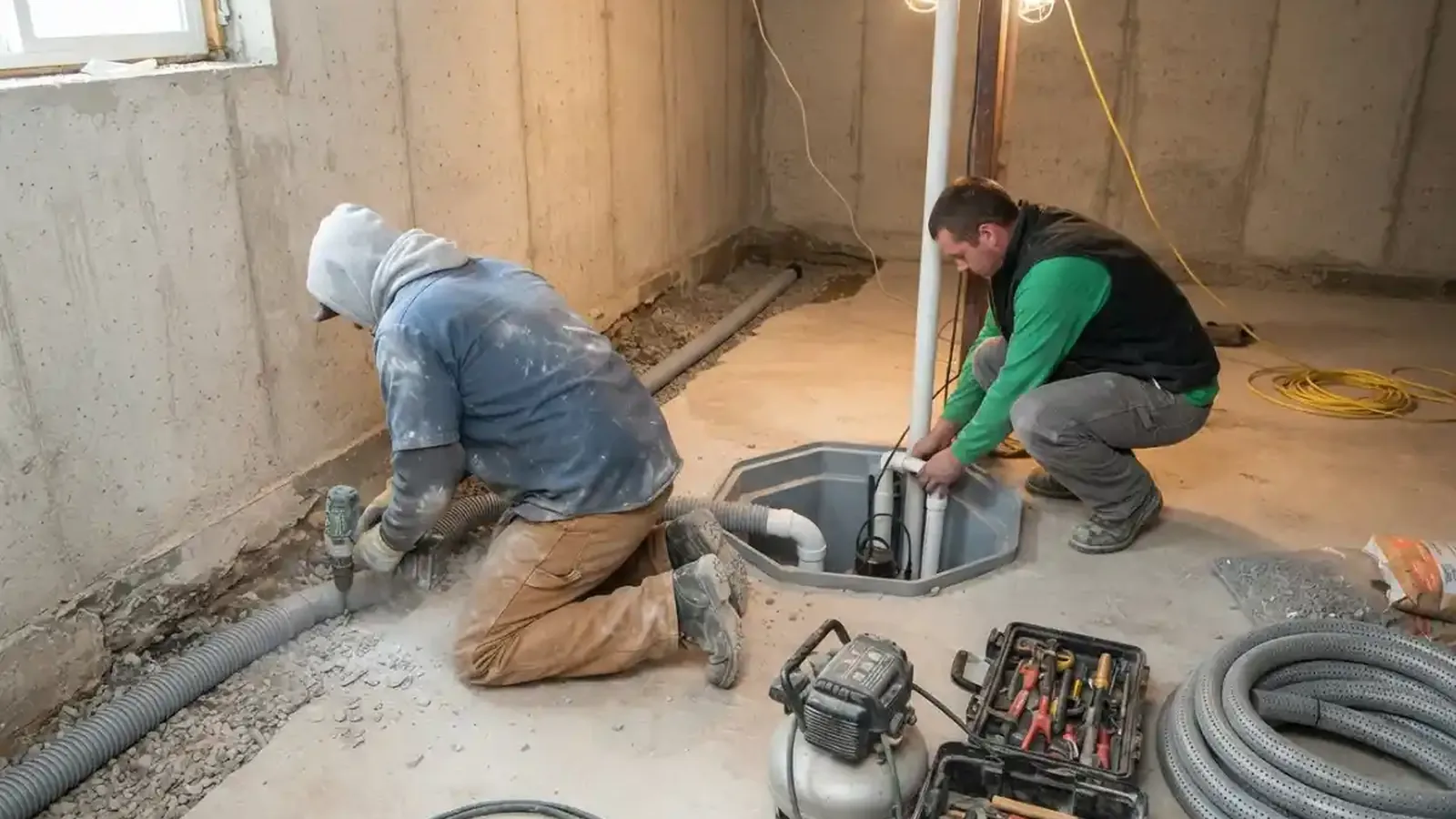
When water gets into a basement, a wet dry vacuum is the first tool most people reach for. It does a good job on a few inches of clean water and wet carpet. It does not solve the cause. If the basement floods again after the next rain, the water source is still there and you need a drainage system, not a bigger vacuum.
This guide covers safe cleanup, the limits of a vacuum, what to check to find where the water comes from and the plumbing-side fixes that keep a basement dry. For structural cracks or a failing foundation, a foundation contractor or engineer is the right person to call.
Safety first: before you go into a wet basement
- Do not enter if water is near outlets, appliances or the electrical panel. Turn off power from a dry panel, or call your electric utility.
- Wear rubber boots and gloves. Floodwater, and especially sewer water, carries bacteria.
- Use a vac rated for wet pickup, and plug it into a ground fault protected outlet outside the wet area, with a dry extension cord rated for the load.
- If the water is dark, smells of sewage or came up through a floor drain, it is contaminated. Call a professional for cleanup.
- Open windows if it is safe to do so, and run fans to start drying the air.
Cleanup with a wet dry vac
Remove the water
Start at the lowest point and work outward. Empty the canister often, since a full tank is heavy.
Remove wet materials
Pull up wet carpet and pad. Throw away porous items that cannot be dried in a day or two.
Dry the space
Use fans and a dehumidifier and keep them running until walls and floors read dry.
Clean and disinfect
Wash hard surfaces with a cleaner suited to the job. Check for mold in the following days.
Find the source
Look at where the water entered. The next section lists the usual places.
Where basement water comes from
| Source | Clue | Fix |
|---|---|---|
| Groundwater through the floor-wall joint | Water along the wall after rain | Interior drain and sump pump, see basement waterproofing. |
| Downspouts and grading | Water at one spot, near a downspout | Extend downspouts, regrade. |
| Floor drain backup | Water from the drain, smell | Main line cleaning and a backwater valve, see sewer line cleaning. |
| Plumbing leak | Damp wall or floor, no link to rain | Leak detection. |
| Failed sump pump | Pit full, pump silent | Sump pump repair. |
| Foundation crack | Water through the wall | Foundation contractor. |
What a vacuum cannot do
A vac removes water that is already there. It does not remove water that is entering. A basement that takes in water during every storm needs a way for the water to leave on its own, which is what a sump pit, an interior drain and a discharge line do together.
A vacuum is also not made for sewage. Contaminated water can damage the vacuum and expose you to bacteria. If sewage is involved, stop and call a professional.
Plan the plumbing side of a dry basement
The plumbing side includes a sump pit and pump, an interior drain along the wall, a clear and well-directed discharge, and a battery backup. A backwater valve on the sewer line can stop sewage from rising through a floor drain during a heavy storm. Which of these fit your house depends on where and how the water enters.
The plan should come after you identify the source. We describe how it works on our basement waterproofing page and give a written scope before work starts.
Drying and mold: the first seventy-two hours
Mold can start to grow on damp material within a day or two, so drying quickly matters more than cleaning thoroughly. Get air moving with fans, run a dehumidifier and pull baseboards loose from wet walls so air reaches the cavity behind them.
Check the moisture in drywall and framing with a meter, and cut out any drywall that stays wet. Discard insulation that has soaked up water, since it dries slowly and keeps the wall damp. If you are unsure, a drying company can measure the moisture and tell you when the building is dry enough to close up.
Frankfort floods and basement water in context
The Kentucky River crested at 48.47 feet in Frankfort in December 1978, the highest on record, and more than half of downtown was under water, according to FEMA's high water mark pilot summary. In April 2025 river flooding led to evacuations and requests to conserve water. A sump pump does not protect against river floodwater entering a house.
Ask your insurance agent about flood coverage, since many homeowner policies do not cover it. Check with local officials about conditions at your address. Our pages for Versailles and Midway describe our service in towns where heavy rain can also lead to basement water.
Source type: FEMA high water mark summary and local government notices
Questions we hear about wet dry vac basement cleanup
A few inches in a small area. Large volumes need a pump.
No. Contaminated water needs professional cleanup.
From a day to several days with fans and a dehumidifier, depending on how wet the materials are.
No. It handles groundwater. River flooding is a different problem.
It depends on the cause and the policy. Ask your agent before you file.